Walk into almost any office building today and you’ll find employees clocking in with a tap on their phone or a quick scan of their badge. But just over a century ago, this process looked completely different. The journey from paper time cards to sophisticated time and attendance software tells a bigger story about how work itself has changed.
Before the Time Card System: Manual Timekeeping
In the early days of manufacturing, tracking employee hours was entirely manual. Factory foremen or timekeepers would stand at the entrance with notebooks, writing down when each worker arrived and left. For small operations with a handful of employees, this worked fine. But as factories grew to employ hundreds or even thousands of workers, the system fell apart.
The problems were obvious. Errors crept in constantly. Workers could dispute their hours. Foremen couldn’t watch everyone at once. Calculating weekly pay required hours of arithmetic. And when disagreements happened, there was rarely a reliable record to settle them.
The Birth of the Time Card System
By Robert Powell, CC BY-SA 3.0
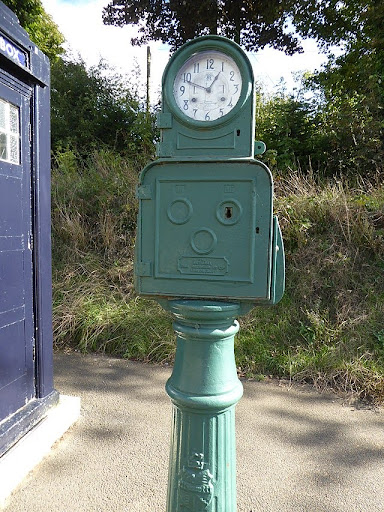
In 1888, a jeweler named Willard LeGrand Bundy changed everything. Working in Auburn, New York, Bundy invented the first mechanical time recorder. His device did something revolutionary: it allowed employees to insert a paper card into a slot, and the machine would stamp the exact date and time onto that card.
This was the original time card system. Each employee got their own card, and they’d punch in when they arrived and punch out when they left. At the end of the pay period, supervisors could simply look at the stamped times and calculate hours worked. No more standing at the gate with a clipboard. No more arguments about who worked what hours.
The Bundy time recorder was an instant success. By 1898, Bundy’s company had sold more than 9,000 units. Factories across America installed them at their entrances. The term “punching the clock” entered the language and never left.
Time Card Systems Evolve
By Rodw – Own work, Public Domain
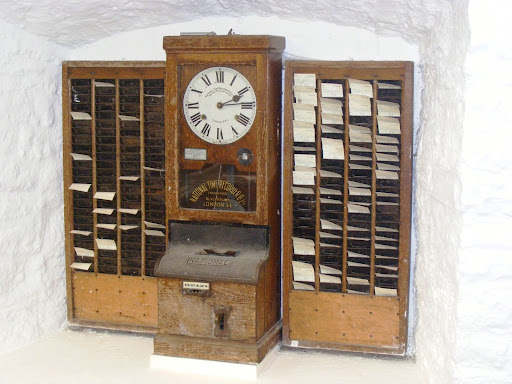
For most of the 20th century, the basic time card system remained largely unchanged. Employees walked up to a machine, grabbed their card from a rack, inserted it into the slot, and the machine stamped the time. The cards piled up, and at the end of the week or month, someone in payroll would manually review them and calculate hours.
But problems persisted. “Buddy punching” became common—one employee would clock in for a friend who was running late. Cards could be damaged or lost. And the manual calculation process was still time-consuming and prone to errors.
In the 1970s, technology started catching up. Self-calculating machines appeared that could add up the total hours on a time card automatically. These machines saved payroll departments significant time, but employees still relied on physical cards.
The Digital Revolution Arrives
The late 1970s marked a turning point. The first punch card systems connected to microprocessors appeared, bridging the gap between mechanical time clocks and modern digital systems.
Around the same time, the invention of the electronic spreadsheet by Richard Mattessich opened new doors. Programs like VisiCalc could perform automatic calculations that mechanical machines couldn’t handle. Suddenly, businesses could process time data faster and more accurately than ever before.
By the 1980s and 1990s, magnetic stripe cards replaced paper cards. Employees would swipe their cards instead of punching them. These systems could connect to computers, generating reports and catching errors that would have slipped through with manual processing.
Modern Time and Attendance Software
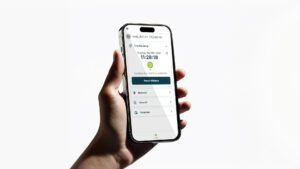
Today’s time and attendance systems bear little resemblance to Bundy’s original invention. Cloud-based software has replaced physical time clocks in many workplaces. Employees can clock in from their phones, tablets, or computers. Biometric readers prevent buddy punching. GPS tracking confirms that remote workers are where they say they are.
But the biggest change isn’t just how employees clock in. It’s what happens after. Modern systems can automatically calculate overtime, track paid time off accruals, apply complex pay rules for different employee groups, integrate directly with payroll systems, and generate compliance reports.
Take systems like Ecotime by HBS, which has evolved from decades of experience in the industry. These platforms don’t just record when someone clocks in and out. They can handle unlimited pay rules and accrual calculations, manage multiple employee profiles with different requirements, create detailed audit trail reports for compliance, process retroactive changes when policies update, and give employees self-service access to review their own time records.
What used to require a timekeeper, a room full of paper cards, and hours of manual calculation now happens automatically in the background.
The Remote Work Challenge
The shift to remote and hybrid work has created new demands for time tracking. Employees working from home, visiting client sites, or moving between job locations need flexibility that traditional time card systems never provided.
Modern time and attendance software addresses this with mobile apps that let employees clock in from anywhere. Geofencing can create virtual boundaries around work sites, allowing clock-ins only when employees are actually present. Managers can review and approve timesheets from their phones instead of waiting to return to the office.
The technology has come full circle in a way. Bundy’s time recorder solved the problem of tracking workers in one factory. Today’s software solves the same problem for workers spread across multiple locations, time zones, and work arrangements.
From Simple Stamps to Complex Calculations
The evolution from time card systems to modern software reflects broader changes in how businesses operate. Early time clocks simply recorded arrival and departure times. That was enough when everyone worked the same shift for the same hourly rate.
But as organizations grew more complex, time tracking needed to keep pace. Different departments have different overtime rules. Union contracts specify precise break times and premiums. Some employees earn shift differentials. Others accumulate vacation time at different rates based on their tenure.
A basic time card system can’t handle this complexity. Manual calculations become impossible when you’re dealing with hundreds of employees, each with their own unique combination of rules and policies. This is where specialized time and attendance software becomes necessary.
The Compliance Factor
One thing that hasn’t changed since 1888: employers need accurate records. But the stakes have increased. Federal and state labor laws now mandate specific record-keeping practices. Overtime calculations must follow exact formulas. Break times need documentation. And if something goes wrong, businesses need to produce detailed records.
Time card systems kept physical records, but pulling historical data meant digging through filing cabinets full of old cards. Modern software maintains complete audit trails. If a labor dispute arises or an audit happens, businesses can instantly generate reports showing exactly who worked what hours under which conditions.
What Hasn’t Changed
Despite all the technological advances, some fundamentals remain constant. Businesses still need to know when employees start and stop work. Employees still need to get paid accurately for their time. And the relationship between hours worked and wages earned is still the foundation of hourly employment.
The language persists too. We still talk about “clocking in” and “punching the clock” even though most of us haven’t touched a physical time clock in years. The metaphors stick because they capture something basic about the structure of work.
Looking Forward
Time tracking will continue to evolve. Artificial intelligence and machine learning are already being integrated into time and attendance systems. These systems can spot patterns, flag anomalies, and even predict staffing needs based on historical data.
But the core function remains what it was in 1888: creating an accurate, reliable record of when people work. The tools have changed dramatically. The need hasn’t.
From Bundy’s mechanical time recorder to cloud-based software platforms, the history of time tracking shows how technology adapts to solve persistent human problems. The paper time card worked well for its era. Today’s businesses need something more flexible, more accurate, and more capable of handling the complexities of modern work. But they’re still solving the same basic challenge that inspired Bundy to invent his time recorder more than a century ago.